
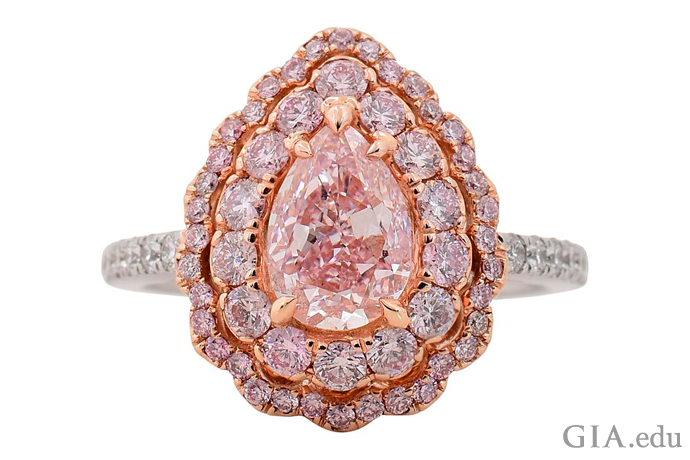
Pear-shaped diamond engagement rings are having a strong revival in 2026, moving well beyond the traditional “teardrop solitaire.” The biggest shift is toward more individual, sculptural designs and distinctive settings. Recent industry coverage puts pear among the leading fancy shapes, with one 2026 ranking placing it at #3 in engagement-ring popularity.
The key pear-shaped diamond trends for 2026
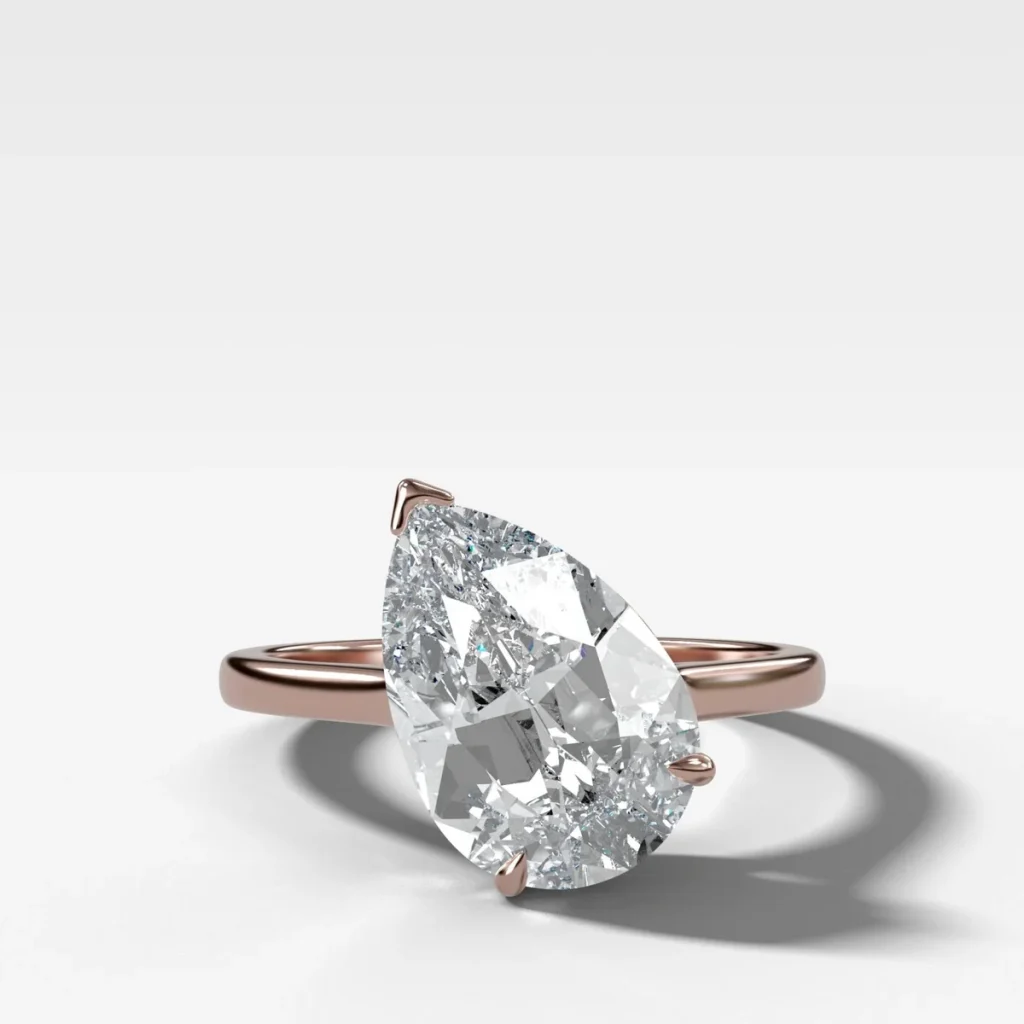
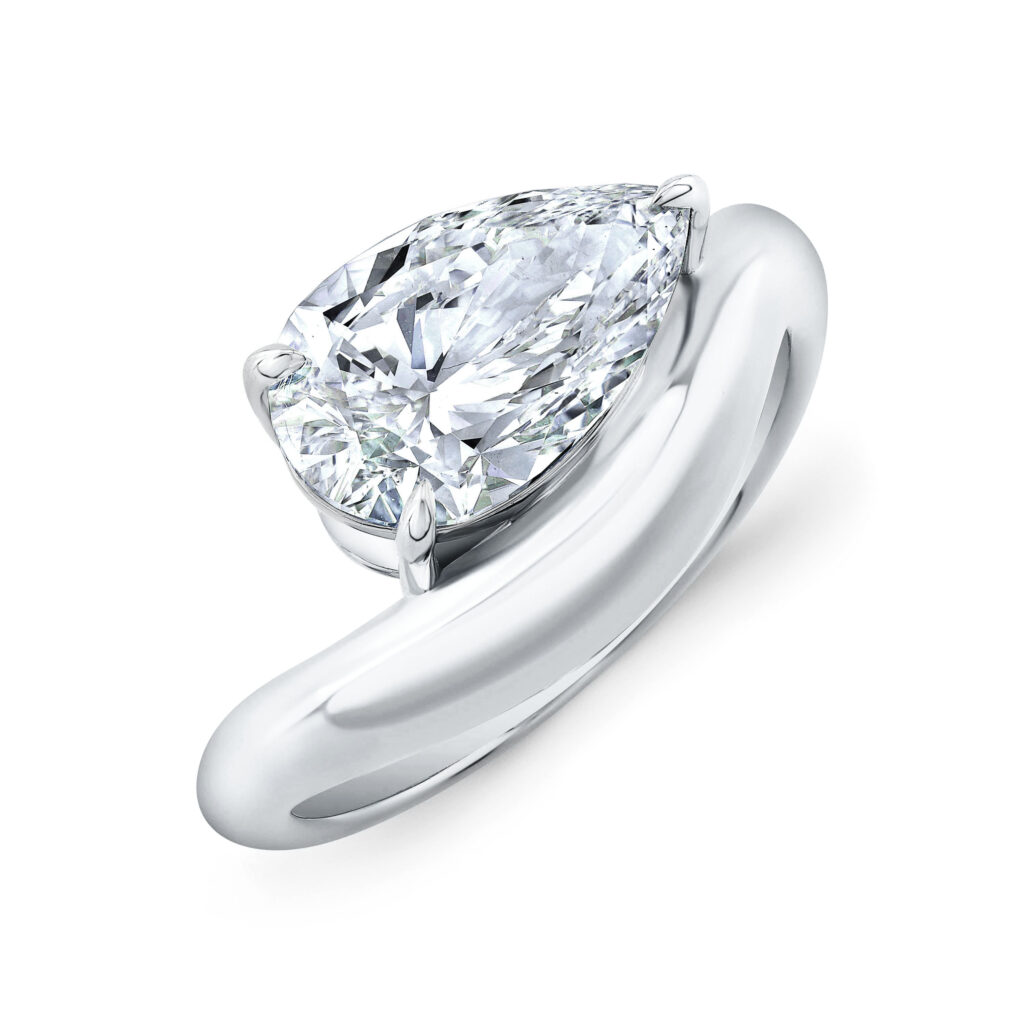
1. East-west pear settings
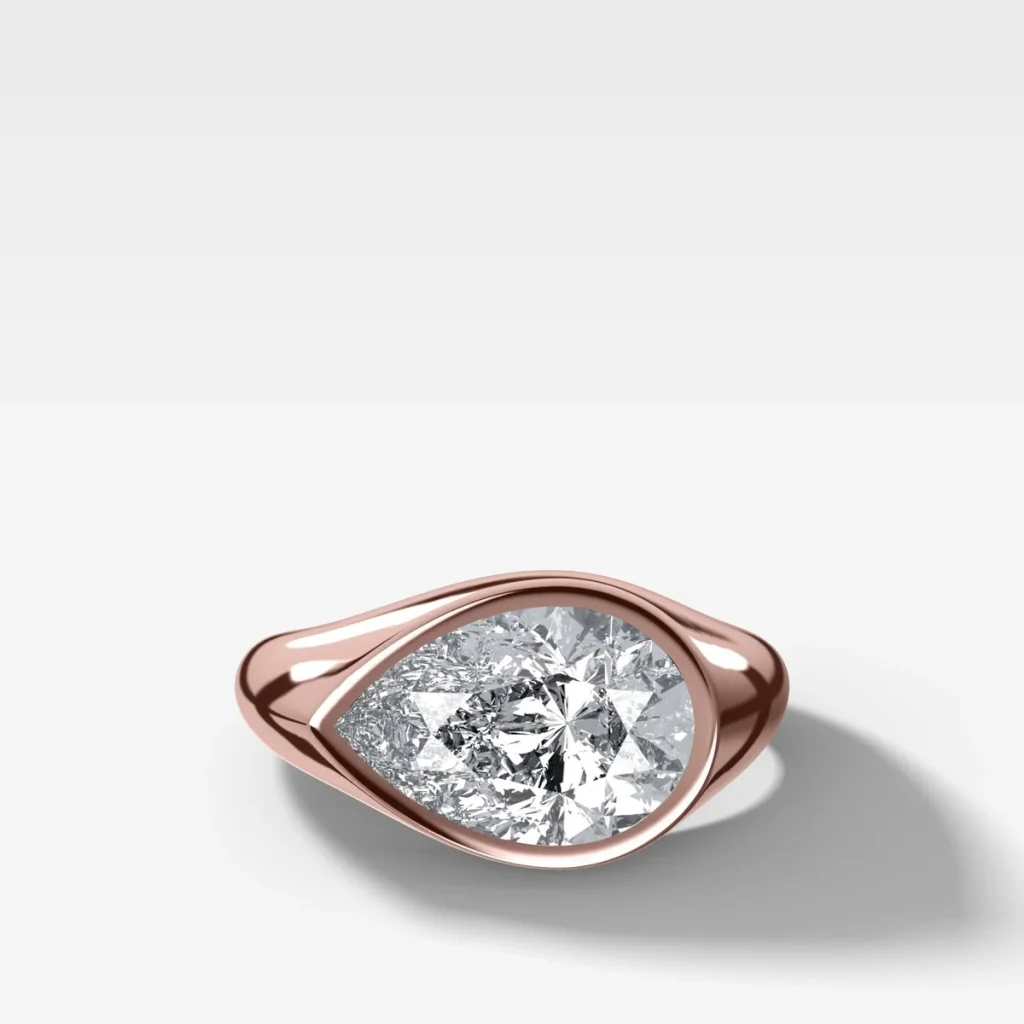
Probably the most fashion-forward development is turning the pear sideways across the finger, rather than pointing it toward the fingertip. It gives the ring a wider, more architectural appearance and makes the familiar pear shape feel completely new.
2. Elongated pears with softer points
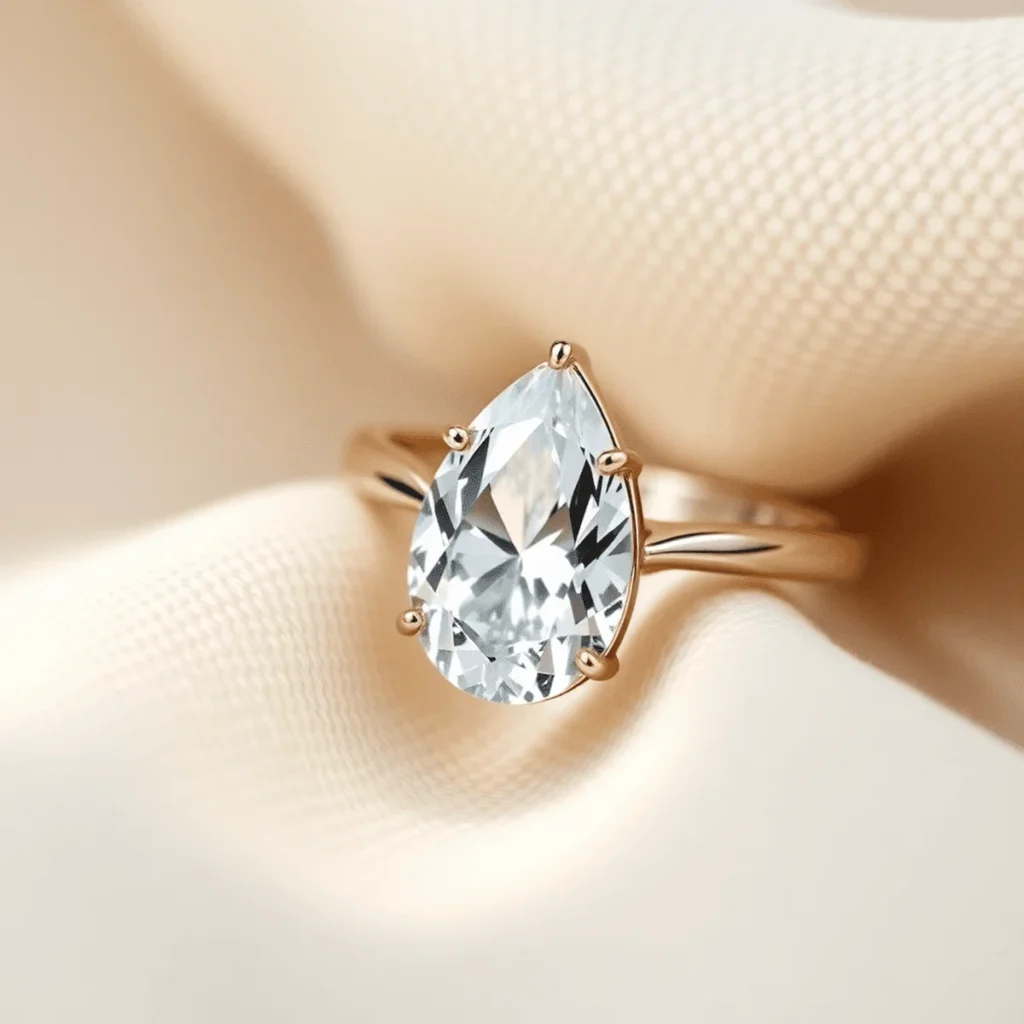
Buyers are becoming much more selective about proportions. Rather than extremely short, rounded pears, there’s growing interest in longer silhouettes with gently rounded shoulders and softer tips. British Vogue specifically identifies demand for antique-style pears with rounded tips.
3. Antique and old-world pears
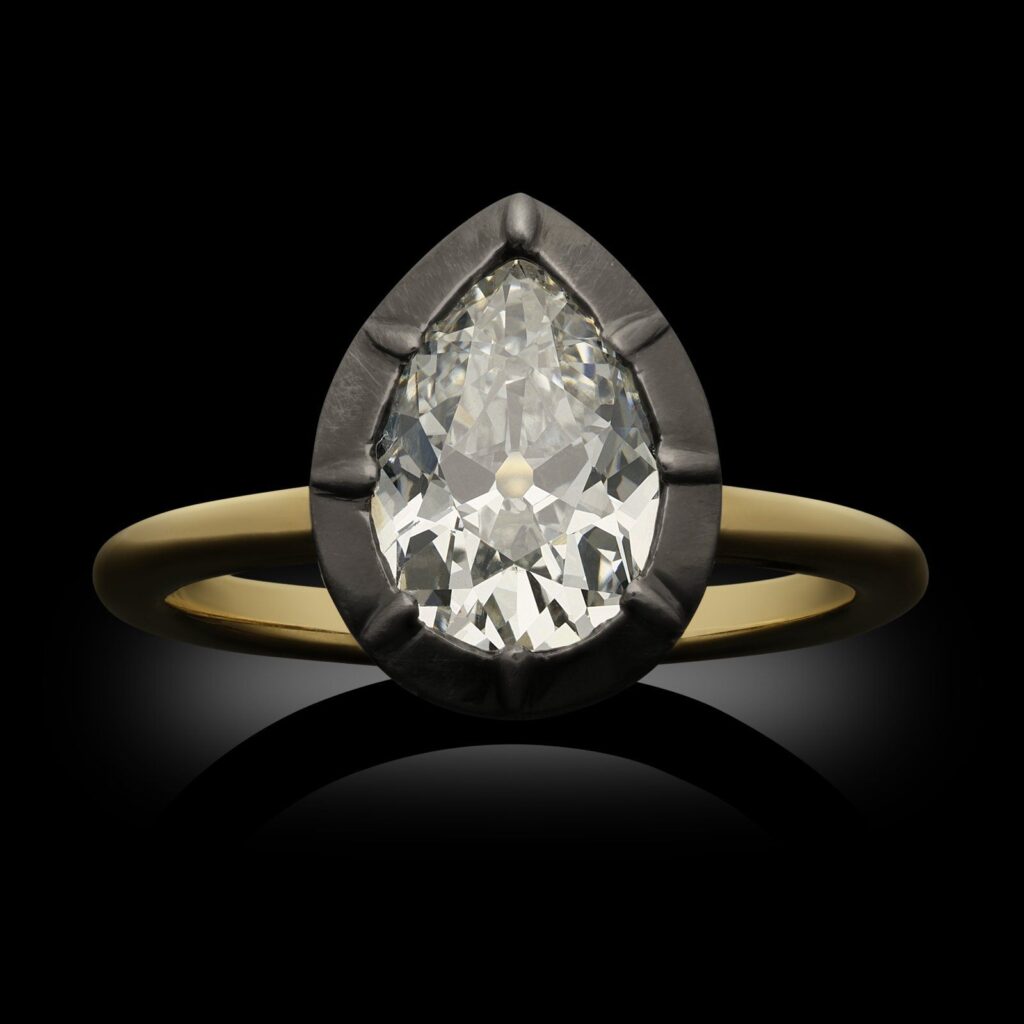
This is an especially interesting trend for natural-diamond buyers. Instead of perfectly symmetrical, ultra-brilliant modern cuts, designers are embracing pears with a more romantic, handcrafted character—sometimes paired with vintage-inspired settings. The broader 2026 bridal trend is toward individuality and antique cuts rather than pristine uniformity.
4. Minimalist solitaire pears
The pear’s silhouette is distinctive enough that it increasingly doesn’t need a halo or elaborate setting. A single pear diamond on a simple band—particularly yellow gold or platinum—is becoming a very sophisticated look. Larger centre stones make this approach particularly effective.
5. Yellow gold is back in a big way
Pear diamonds look particularly contemporary in 18k yellow gold, especially when contrasted with a white or near-colourless stone. The combination gives the ring a softer, warmer, slightly vintage character rather than the more conventional all-white look.
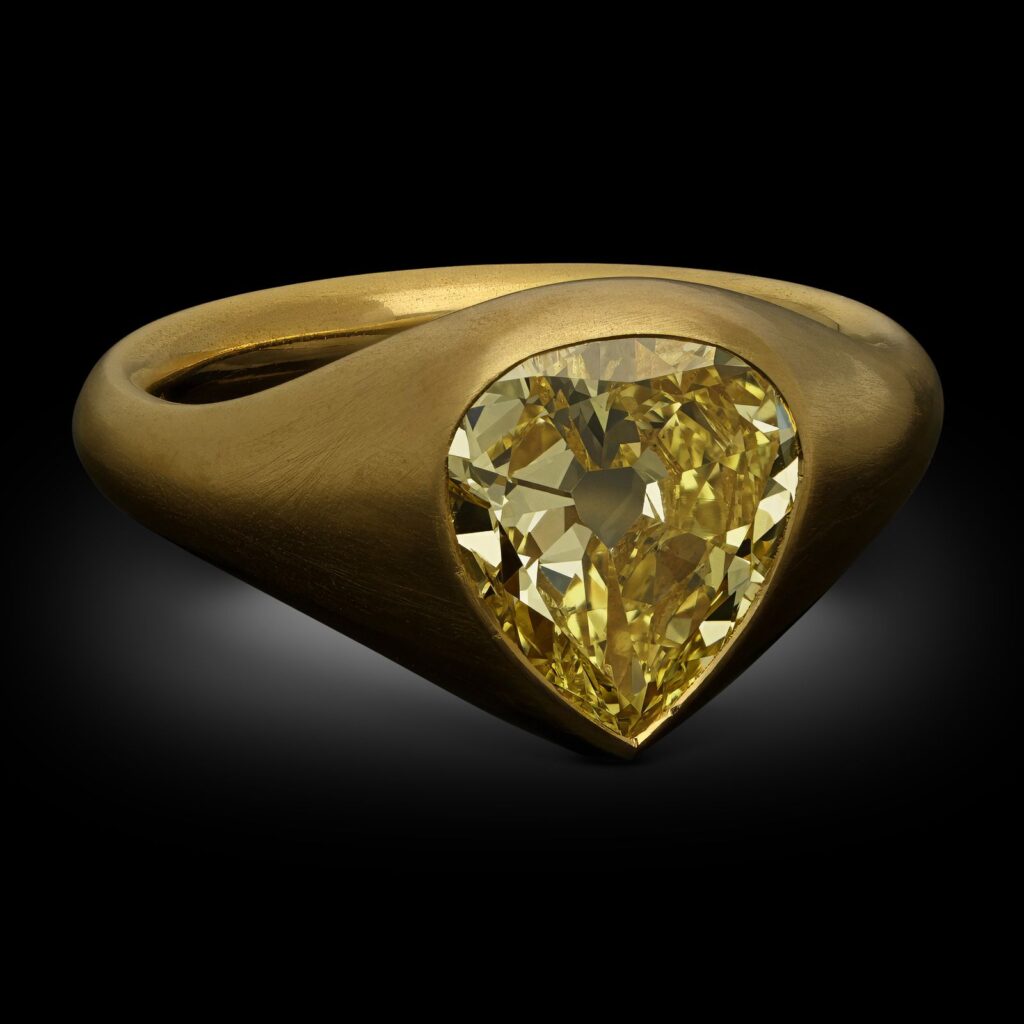
6. Bezel and partial-bezel settings
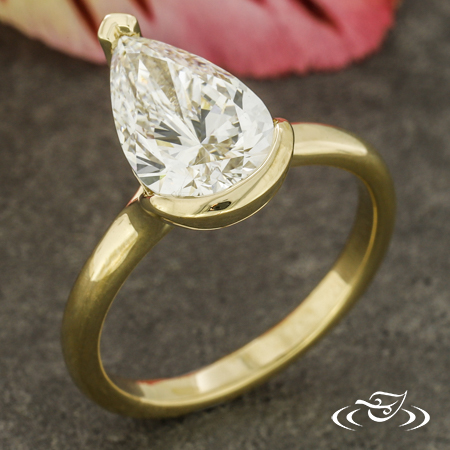
The pointed end of a pear is its defining feature—but also its most vulnerable area. Consequently, protective settings are becoming more attractive. Bezel, partial-bezel and carefully engineered prong settings can protect the tip while giving the ring a modern, clean appearance.
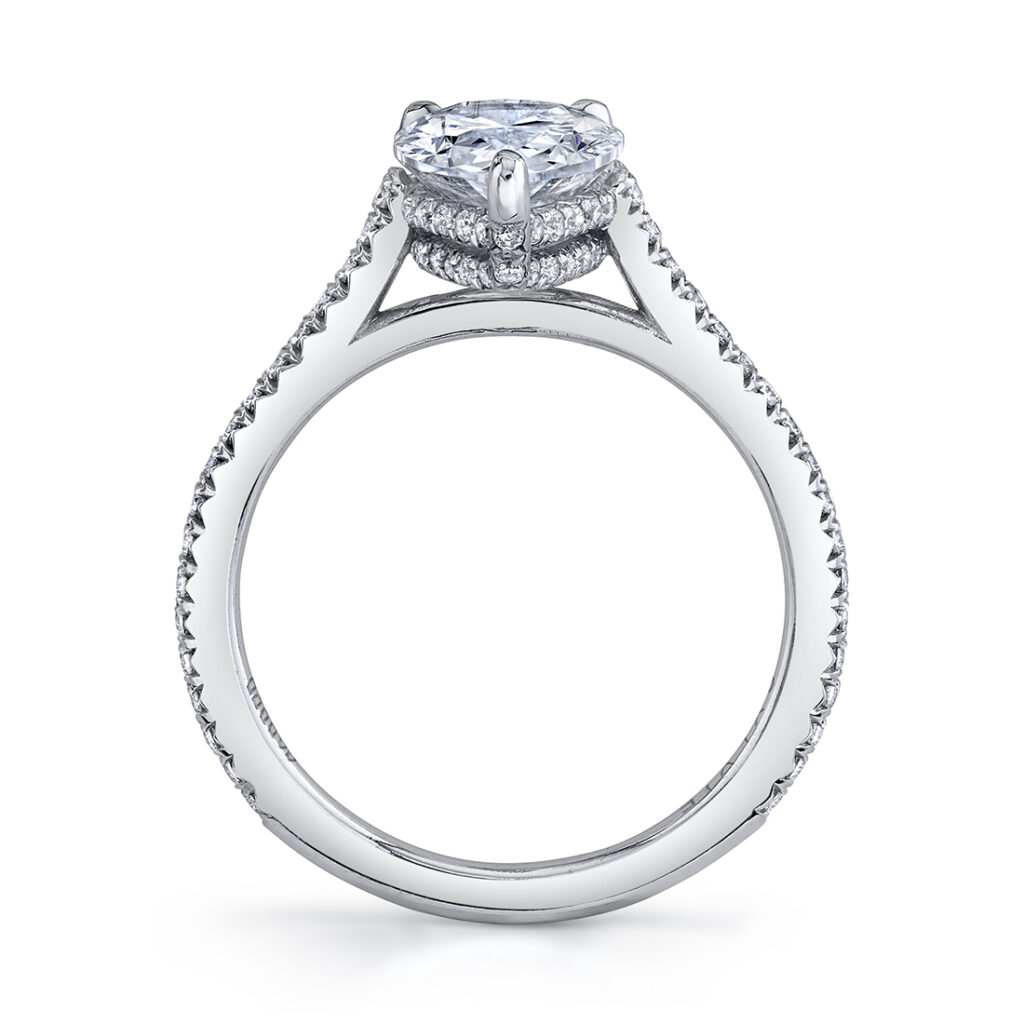
7. Hidden halos rather than traditional halos
Instead of surrounding the pear with a conspicuous halo, designers are increasingly putting the additional diamonds underneath the centre stone. The result is a subtle burst of sparkle visible from the side without taking attention away from the pear itself. Celebrity jewellery is helping drive this minimalist-but-luxurious approach.
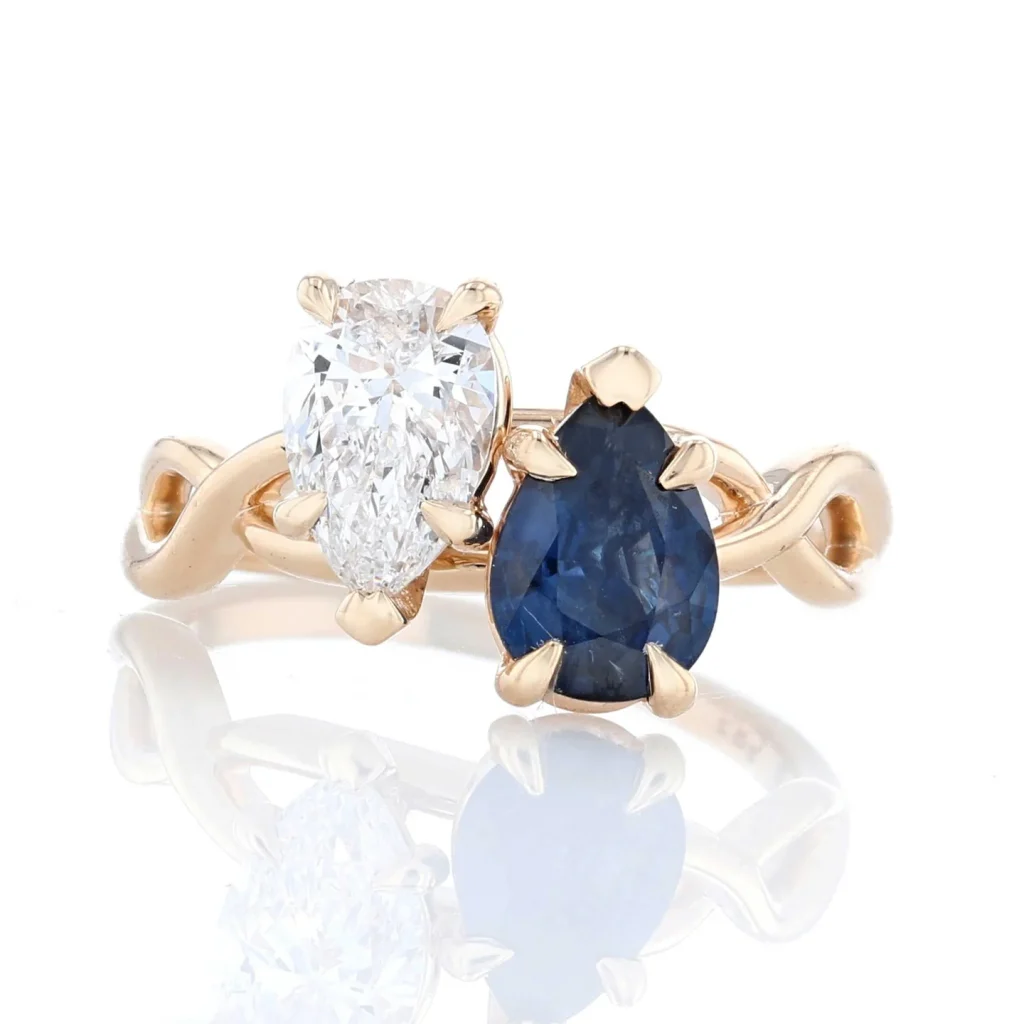
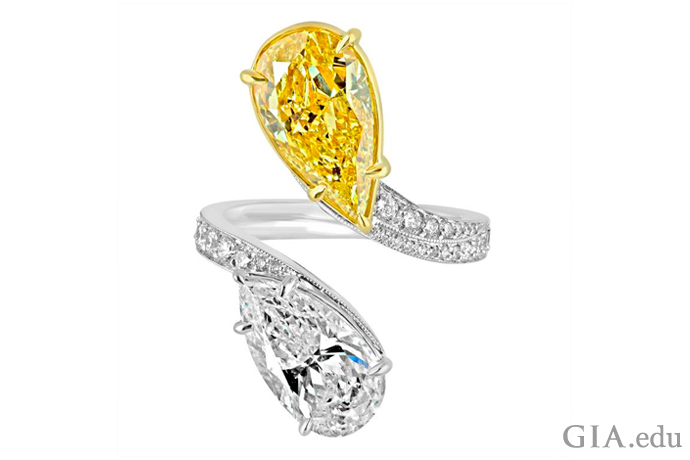
8. Pear Toi et Moi rings
The pear is particularly effective in Toi et Moi designs, either paired with another pear or contrasted with an oval, emerald or marquise. The shape has already featured prominently in celebrity jewellery, helping reinforce its fashion credentials.
9. Bigger pears with simpler settings
There’s a noticeable move toward letting the centre stone do the talking. Larger pears on relatively understated bands create a dramatic look without the ring becoming overly ornate. This fits the wider 2026 movement toward substantial centre stones combined with stronger, simpler gold profiles.
10. More individuality in proportions
Perhaps the biggest trend isn’t a particular setting—it’s personalisation. Couples are increasingly choosing whether they want a pear that’s long and slender, wide and rounded, antique-looking, asymmetrical-looking, or dramatically pointed. The pear is particularly suited to this because relatively small changes in proportions dramatically alter its personality.
What I think is the strongest look
For a 2026 natural-diamond engagement ring, I’d particularly watch:
An elongated antique-style pear, around 1.5–2.0+ carats, in a substantial 18k yellow-gold or platinum setting, with minimal visible metal and a discreet protective setting.
For something more fashion-forward, take that same stone and turn it east-west. That’s the look that feels most “2026” rather than simply timeless.
One important buying point
With pears, symmetry and the bow-tie effect deserve particular attention. Unlike a round brilliant, there isn’t a single universally ideal proportion; the shape can vary considerably. The pointed tip also needs adequate protection because it is more susceptible to damage.
For a natural diamond, I would therefore prioritise visual beauty and symmetry over simply chasing the highest colour/clarity grade.
If you’re looking at this specifically from a natural-diamond retail perspective, the pear is particularly interesting right now because it offers customers something that feels fashionable and distinctive without being a passing fad.