
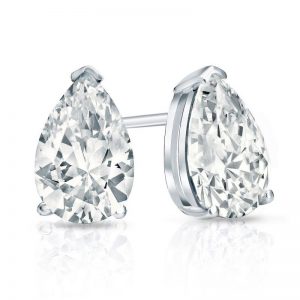
Measuring Diamond Quality 1 Choosing the cut When it comes to diamond studs Cut is far more important than colour or clarity. In reality the only thing you notice about studs (unless the quality is very poor) is the sparkle and the size. Therefore it’s imperative that the diamond is well cut. Not only will […]
News
How to Buy Diamond Stud Earrings (Part 1)
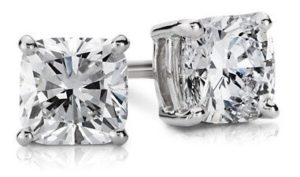
Diamond studs are, without a doubt, one of the most universally desired accessories. They make for a perfect gift because they are always wearable. Every woman needs a pair. They’re probably the most versatile piece of jewellery out there and can be worn with anything, for any occasion. They’re great for casual evenings, work and formal […]
Solitaire Diamond Pendant Buying Guide (Pt 2)
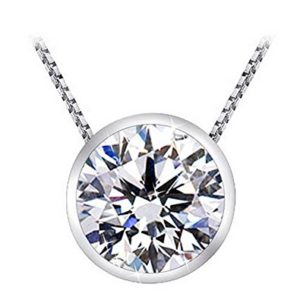
Diamond Settings What setting is best for a Diamond Pendant? This is something that should be carefully considered in relation to the style of the wearer. A bezel setting, where the diamond is set directly into the metal, is generally considered to be a more contemporary style. Whereas a prong setting, much like you might […]
Solitaire Diamond Pendant Buying Guide (Pt 1)
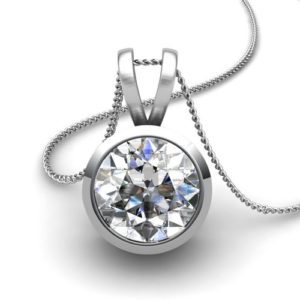
Solitaire Diamond Pendant Buying Guide A diamond solitaire pendant is a classic, timeless piece of jewellery which suits any outfit and all occasions. It is loved for its simplicity, worn for its beauty and treasured because it is enduring. The solitaire diamond pendant is for life and guaranteed to never go out of fashion. Pendants and […]
Pavé and Micro-Pavé Settings
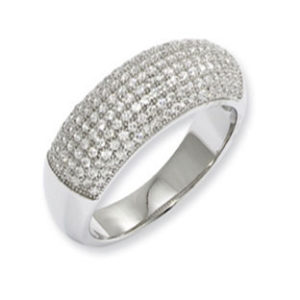
Pavé and Micro-Pavé Settings What is a Pavé or Micro-Pavé Setting? Pavé is pronounced “pa-vay” and originates from the French word meaning paved, to best describe the arrangement of diamonds set across the surface. Diamonds are arranged at regular intervals in close proximity and in a uniform arrangement, building up what appears to be a […]
Pavé Setting
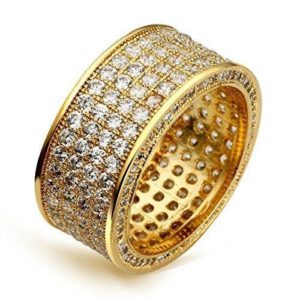
The pavé setting, pronounced “pa-vay,” comes from the French word “to pave,” meaning a ring paved with diamonds. This is achieved by setting very small diamonds close together with almost no space between them. The process involves drilling a series of small holes into the ring, carefully placing each stone into its designated hole. Tiny […]
GRAIN SETTING
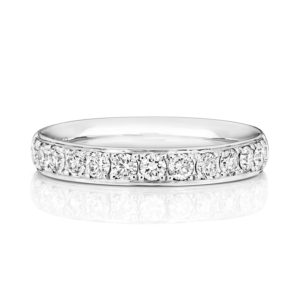
Grain set rings are set with diamonds or coloured stones held, quite literally, within grains of metal that are raised from the ring to hold each stone in a precision setting. For each small stone this process involves drilling a ‘seat’, or raising a small piece of metal from the ring where the stone will […]
Flush Setting
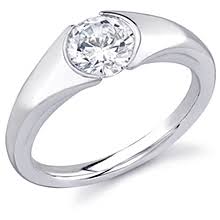
A flush setting, also known as a gypsy or burnish setting, sets the diamond into a drilled hole in the band of the ring so that the diamond sits “flush” within the band. To achieve this effect, the jeweller hammers the metal around the circumference of the diamond to hold it securely in place. However, […]
The Tiffany Setting
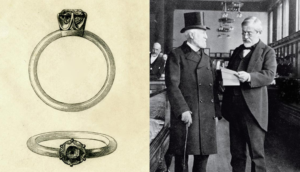
In 1886 Tiffany & Co. developed a special solitaire six-prong setting to maximize light return on a diamond ring. This plain-band setting has come to be known as “the Tiffany setting.” This setting is distinguished by the knife edge of its band and the curved design of its prongs. It is a variant of the […]
Cluster Setting
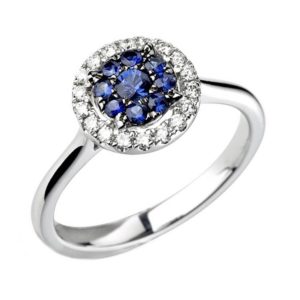
A cluster setting “clusters” stones tightly together in order to mimic the effect of one large diamond. It can either contain a larger centre stone or cluster together stones of equal size. The effect of combining diamonds together creates a dazzling display of light, sparkle and brilliance. In the example below this cluster setting gives […]