
The latest trends in Round Brilliant Cut diamond engagement rings — 2026
The round brilliant cut remains one of the most enduring choices for an engagement ring, thanks to its exceptional sparkle, versatility and timeless appeal. In 2026, the trend is less about simply choosing a classic solitaire and more about giving the round diamond a distinctive personality through setting, proportions, metal choice and individual design details.
For buyers of natural diamond engagement rings, the strongest design directions combine traditional craftsmanship with contemporary styling, often with a renewed appreciation for quality, individuality and long-term wearability.
1. Six round brilliant engagement ring trends to watch
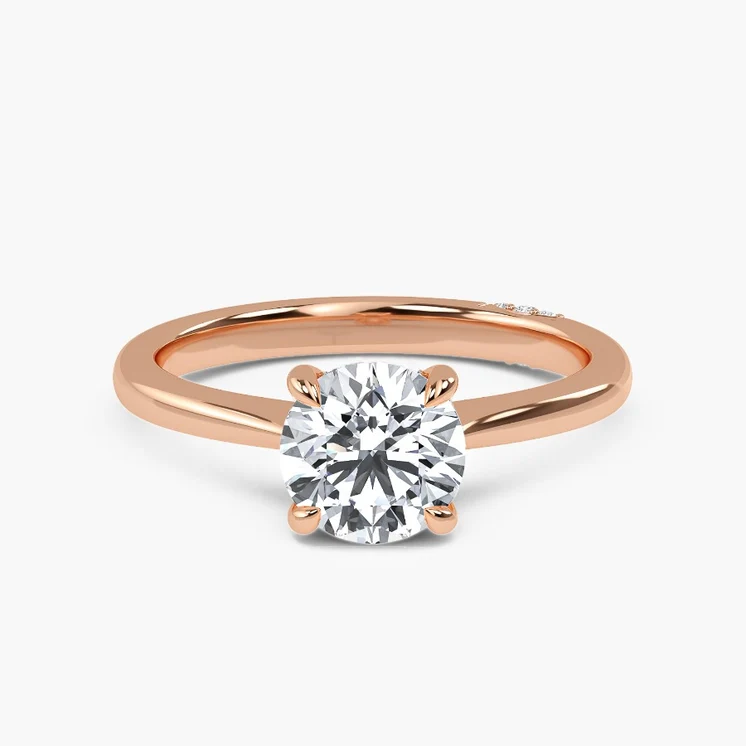
1. The modern solitaire
Timeless favourite
A round brilliant diamond held by four or six claws, on a clean, elegant band. The modern interpretation often uses a more sculpted setting or a slightly stronger band rather than an ultra-thin shank.
Why it appeals: the diamond remains the star, making this a versatile choice for everyday wear and a future heirloom. Four claws create a more open, contemporary appearance; six offer a traditional look.
Best for: classic buyers who want understated luxury.

2. Bezel settings and substantial gold bands
Strong contemporary trend
A smooth rim of gold or platinum surrounds the round diamond, sometimes paired with a wider, sculptural band. The result feels architectural and modern rather than traditionally bridal.
Why it appeals: the setting protects the diamond’s edge and has fewer exposed claws to catch on clothing. The metal becomes an important part of the design.
Best for: design-conscious buyers and practical everyday wear.

3. Hidden halos
A discreet circle of small diamonds sits beneath the centre stone, visible mainly from the side. From above, the ring retains the clean silhouette of a solitaire.
Why it appeals: it adds detail and extra sparkle without the obvious diamond border of a traditional halo. It is a popular option for buyers who want a classic round diamond with a modern twist.
Best for: buyers who love subtle details and extra sparkle.

4. Vintage-inspired craftsmanship
Think milgrain edges, delicate engraving, fine pavé, hand-finished details and settings inspired by Art Deco or Edwardian jewellery.
Why it appeals: buyers are increasingly interested in rings with character and a sense of craftsmanship rather than designs that look identical. A round brilliant centre stone gives these historical influences a fresh, contemporary balance.
Best for: vintage collectors and those seeking an heirloom aesthetic.

5. Yellow gold and two-tone designs
Yellow gold continues to gain ground, while platinum and white gold remain enduring choices. Two-tone designs combine a yellow gold band with a white-metal setting or claws.
Why it appeals: yellow gold adds warmth and vintage character, while white-metal claws can minimise coloured reflections near the diamond. The combination also works well for people who wear mixed-metal jewellery.
Best for: buyers seeking warmth without compromising a bright, classic diamond look.

6. Three-stone and diamond-accent designs
A round brilliant centre diamond is flanked by two smaller diamonds, or complemented by carefully placed pavé diamonds along the shoulders.
Why it appeals: these designs create more visual complexity and can carry personal symbolism, while retaining the round diamond’s familiar brilliance. Contemporary versions tend to focus on balanced proportions and well-defined silhouettes.
Best for: buyers who want more presence than a solitaire without a traditional full halo.
2. Which diamond specifications matter most?
Trends influence the setting, but for a round brilliant diamond, the quality of the stone remains central to its beauty.
| Specification | What to look for |
|---|---|
| Cut | Prioritise an excellent cut grade and strong light performance. |
| Colour | G–H can offer a pleasing balance of whiteness and value; D–F suits buyers seeking near-colourless to colourless grades. |
| Clarity | VS2–SI1 can offer good value if the diamond is eye-clean. Inspect the individual stone. |
| Carat | Choose the size that suits the finger, setting and budget rather than chasing a particular number. |
| Certification | For natural diamonds, look for an independent grading report, such as one from GIA. |
One important distinction: cut quality is not the same as shape. A round brilliant’s proportions, symmetry and polish influence how effectively it returns light to the eye. A smaller, well-cut diamond can look livelier than a larger stone with weaker light performance.
3. Natural diamond rings: where the opportunity lies
For customers specifically seeking natural diamonds, three design directions are especially worth exploring:
- Classic solitaire with exceptional cut: ideal for buyers who value enduring design and the diamond’s brilliance above decorative features.
- Vintage-inspired natural round brilliant: appeals to collectors who appreciate craftsmanship, historical references and individuality.
- Contemporary bezel or sculptural gold ring: suits customers looking for something distinctive that also fits naturally into their everyday jewellery collection.
These are design recommendations rather than a ranking of sales volumes. The right choice depends on the buyer’s personal taste, budget and lifestyle.
4. Which trend is likely to age best?

Best long-term classic
A well-proportioned round brilliant solitaire in platinum or yellow gold. Simple, versatile and easy to pair with different wedding bands.

Best contemporary choice
A bezel-set round brilliant with a substantial gold band. Distinctive, practical and aligned with the move towards sculptural jewellery.

Best for individuality
A vintage-inspired design with milgrain, engraving or a hidden halo. Personal details give the ring character without changing the classic centre-stone shape.
My overall recommendation for 2026 is to start with a beautifully cut round brilliant diamond, then personalise the ring through the setting and metal. Yellow gold, hidden halos, bezels and more substantial bands offer contemporary alternatives, but a classic solitaire remains an excellent choice for anyone prioritising longevity over fashion.